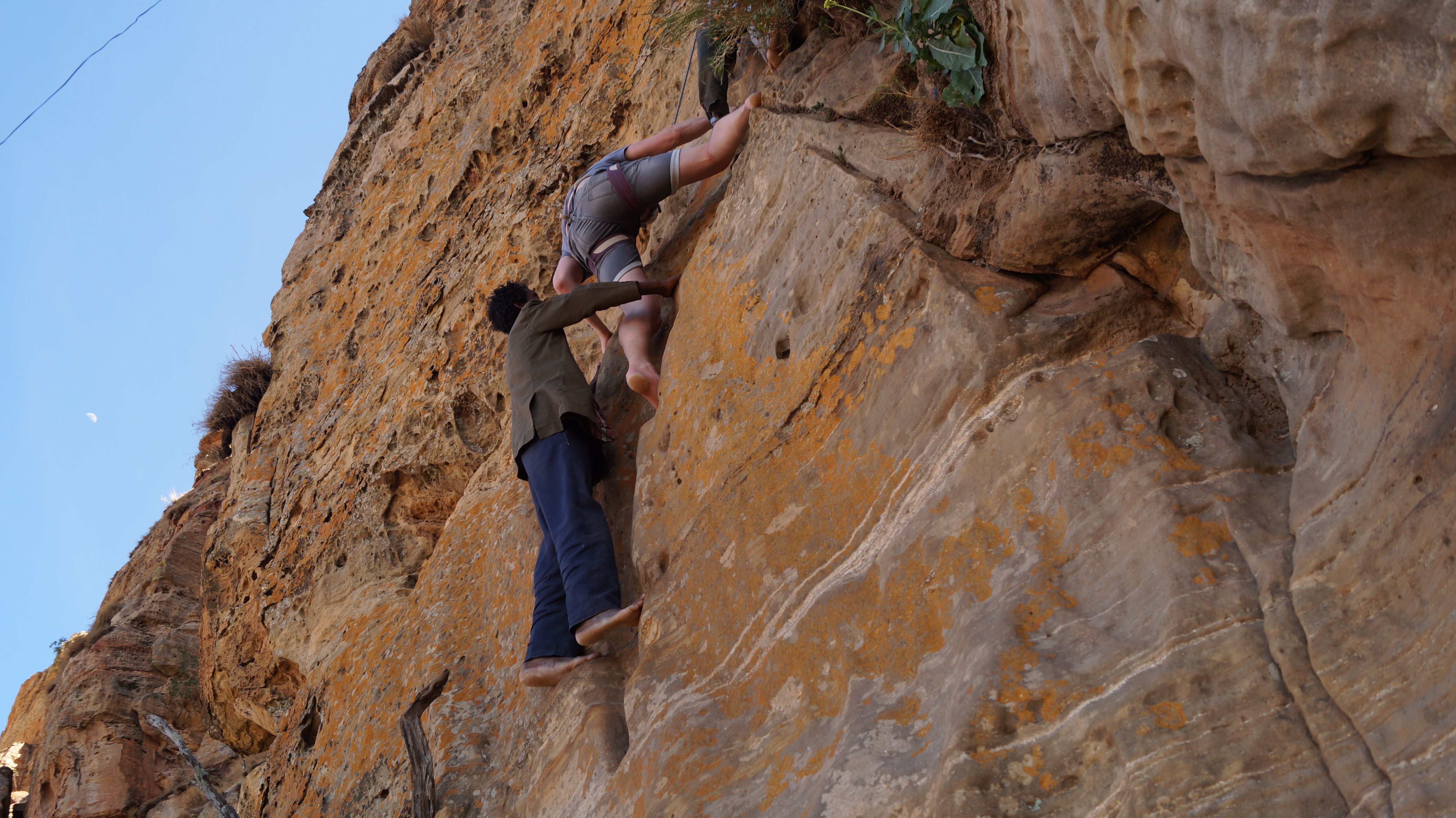
If you have seen photos or videos of the climb to Abune Yemata Guh, you might be asking yourself: Is it actually safe? The short answer is yes—but only with the right guidance.
The Reality of the Climb
The climb involves a vertical section of about 5 or 6 meters. While it looks intimidating, the sandstone has natural "handholds" and "footholds" that have been worn deep into the rock over hundreds of years of use. It is essentially like climbing a very high-grip ladder.
How We Manage Your Safety
- Native Expertise: Our guides have climbed this wall thousands of times. They know exactly where your hands and feet should go and will literally guide your steps if you feel nervous.
- The "Local Assist": At the most technical sections, local assistants are stationed to provide extra stability. They are masters of the rock and ensure every guest feels secure.
- Optional Ropes: For those who have a fear of heights but still want to see the church, we provide safety ropes and harnesses. This allows you to focus on the experience rather than the drop.
Psychology of the Climb
Most people find that the "fear" is more mental than physical. Once you start moving and following your guide’s instructions, the sandstone provides incredible grip. The sense of accomplishment you feel when you step into the church at the top is one of the greatest rewards in global travel.